Capturing the Perfect Sunset: Tips for Travel Photographers
There is something magical about watching the sun slowly disappear beyond the horizon. Whether you’re standing on a quiet beach, overlooking a mountain valley, or wandering through an ancient city, a beautiful sunset creates a moment that feels unforgettable. As someone who has spent countless evenings chasing the golden glow in different destinations, I have learned that capturing an incredible sunset photograph is about much more than pointing a camera toward the sky. It requires preparation, patience, creativity, and a willingness to adapt to changing conditions. Every sunset tells a different story, and no two evenings are ever exactly alike.
Travel photography offers endless opportunities to preserve these breathtaking moments, but success comes from understanding light, composition, timing, and location. While expensive gear can help, experience and observation often matter far more than equipment. By mastering a few practical techniques and embracing the unpredictable beauty of nature, you can create stunning sunset images that reflect both the destination and the emotions you felt while standing there.
Research the Location Before You Arrive
One of the biggest mistakes I made when I first started photographing sunsets was arriving at a location without any planning. I quickly realized that even the most beautiful destination could produce disappointing images if I chose the wrong viewpoint. Now, before every trip, I spend time researching scenic viewpoints, local landmarks, and the direction where the sun sets during that season. Looking at maps, checking weather forecasts, and reading recommendations from fellow travelers help me identify locations with clear horizons and interesting foreground elements. Arriving early also gives enough time to explore different angles instead of rushing at the last minute. Sometimes I discover hidden viewpoints that are even better than the famous ones. Proper preparation removes unnecessary stress and allows me to focus entirely on creativity when the sky begins transforming into brilliant shades of orange, pink, and purple.
Arrive Early and Stay After Sunset
Many travelers pack up their cameras as soon as the sun disappears, but I have found that some of the most beautiful colors appear after sunset. Arriving at least an hour before sunset allows enough time to set up equipment, test camera settings, and observe how the light changes across the landscape. The warm golden light before sunset creates soft shadows and rich colors, making it an excellent time for landscape and portrait photography. After the sun dips below the horizon, the sky often enters what photographers call the blue hour, when cool blue tones blend beautifully with the remaining warm colors. These few minutes can produce dramatic images that feel peaceful and cinematic. Patience has rewarded me with some of my favorite travel photographs because the most magical moments often happen after many people have already left.
Use Natural Elements to Create Strong Compositions
A colorful sky alone rarely creates a memorable photograph. During my travels, I discovered that including interesting foreground subjects transforms an ordinary sunset into a compelling visual story. Trees, boats, mountains, bridges, temples, rocky coastlines, and even people can add depth and context to an image. I often look for leading lines such as roads, rivers, or pathways that naturally guide the viewer’s eye toward the setting sun. Reflections in lakes or wet sand also create dramatic symmetry that enhances the overall composition. Instead of placing the horizon directly in the center of the frame, I usually experiment with different perspectives and framing techniques. Sometimes kneeling closer to the ground or climbing to a higher viewpoint completely changes the mood of the photograph. Creative composition helps communicate the atmosphere of a destination rather than simply documenting the sunset itself.
Understand Your Camera Settings and Work with Light
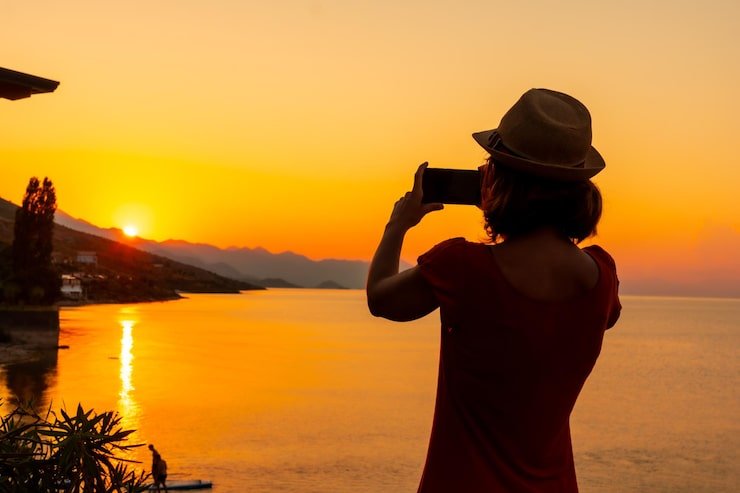
One lesson I learned through experience is that automatic camera settings do not always produce the best sunset photographs. As daylight fades, the camera may brighten the image too much, causing the sky to lose its rich colors. I prefer shooting in manual or aperture priority mode so I can control exposure more effectively. Lower ISO settings help maintain image quality, while a smaller aperture often keeps both the foreground and background sharp. Adjusting exposure compensation slightly darker than the camera suggests usually preserves the vibrant tones of the sky. I also enjoy experimenting with silhouettes by exposing for the brightest part of the sunset instead of the foreground. Understanding how light behaves during different stages of sunset gives photographers greater creative control and allows every image to capture the mood of the moment.
Include Local Culture and Human Stories
Some of my favorite sunset photographs are not simply landscapes but scenes that include people interacting naturally with their surroundings. Fishermen returning with their boats, children playing on a beach, travelers watching the horizon, or street vendors preparing for the evening all add emotion and authenticity to travel photography. These moments tell a richer story than a colorful sky alone. Instead of asking people to pose, I often observe quietly and wait for genuine interactions to unfold. This approach creates natural expressions and timeless images that reflect the character of the destination. Incorporating local culture also helps viewers connect emotionally with the photograph because it captures both the beauty of the place and the life happening within it.
Be Patient Because Every Sunset Is Different
If there is one lesson every travel photographer eventually learns, it is that nature never follows a script. Some evenings begin with thick clouds but end with spectacular bursts of color, while others that seem promising fade into soft pastel tones. I have experienced both situations many times. Instead of becoming frustrated, I learned to appreciate every sunset for its uniqueness. Waiting patiently often reveals unexpected opportunities, whether it’s dramatic cloud formations, birds flying across the horizon, or changing reflections on the water. Even when conditions are less than perfect, there is always something worth photographing. Developing patience not only improves photography skills but also allows travelers to enjoy the peaceful experience of watching the day come to an end.
Edit Your Photos with a Natural Touch
Post-processing is an important part of modern photography, but I believe subtle editing produces the most timeless results. After returning from a trip, I carefully adjust brightness, contrast, highlights, and color balance while preserving the natural appearance of the sunset. Overly saturated skies may attract attention initially, but they often lose authenticity. I also remove minor distractions, straighten horizons, and crop images when necessary to improve composition. Editing should enhance what was already beautiful rather than create unrealistic colors. Every destination has its own unique atmosphere, and thoughtful editing helps reflect the genuine mood I experienced when capturing the scene. Maintaining a natural look ensures that the photograph remains believable and emotionally engaging.
Learn from Every Journey and Keep Practicing
Travel photography is a continuous learning experience, and every trip teaches valuable lessons. Some of my earliest sunset photographs were poorly exposed or lacked interesting compositions, but each mistake helped me improve. Revisiting favorite locations at different times of the year has shown me how changing weather, seasons, and lighting conditions create completely different photographic opportunities. I also make it a habit to review my images after every trip, identifying what worked well and what I could improve next time. Consistent practice develops confidence and sharpens creative instincts. The more sunsets you photograph, the better you become at anticipating light, composing scenes, and recognizing special moments before they happen.
Conclusion
Capturing the perfect sunset is about much more than owning expensive equipment or visiting famous destinations. It is a combination of preparation, observation, technical knowledge, creativity, and patience. Researching locations, arriving early, understanding camera settings, using thoughtful composition, including local culture, and editing with care all contribute to creating memorable travel photographs. Most importantly, every sunset offers a unique opportunity to slow down and appreciate the beauty of the world around you. The images you bring home become more than photographs—they become lasting reminders of the places you’ve explored and the unforgettable evenings you experienced beneath a glowing sky. With practice and passion, every journey can produce sunset photographs that tell stories worth remembering.